
Best Drapery Colors for Bedrooms in Boston, MA: How Color Shapes Mood and Sleep
By Kendra Weldon, owner and lead designer at Simply Windows in Westborough, MA
The best drapery colors for bedrooms are soft, calm shades like blue, sage green, warm gray, and cream. They create a restful mood and pair easily with bedding and walls. If you love drama, deep navy or charcoal can feel just as peaceful when the fabric is lined and the rest of the room stays quiet.
Below, we look at what each color does for a bedroom, how light and room size change your choice, and how to test a shade before you commit.
How does drapery color affect mood and sleep?
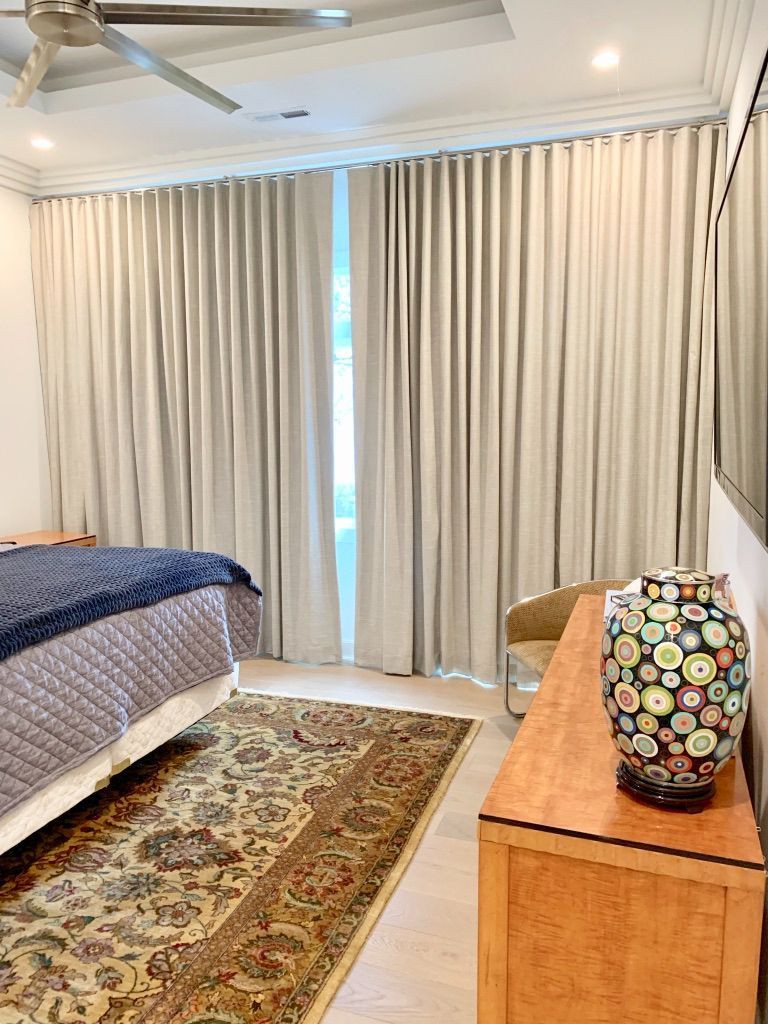
Color shapes how a room feels, even if it is hard to say why. Here is what designers see most often:
- Cool tones like blue, green, and lavender tend to feel calm and quiet.
- Warm tones like red, orange, and yellow tend to feel lively. They are lovely in a living room, but many people find them too stimulating for a bedroom.
- Light colors feel open and airy because they bounce daylight around.
- Dark colors feel cozy and private, like a hotel suite.
A quick honest note: no curtain color guarantees a better night's sleep. What helps sleep most is a dark, quiet room. Color sets the mood, and a good lining controls the light. Our guide to
blackout fabric for curtains explains how to get both.
What are the most popular drapery colors for bedrooms?
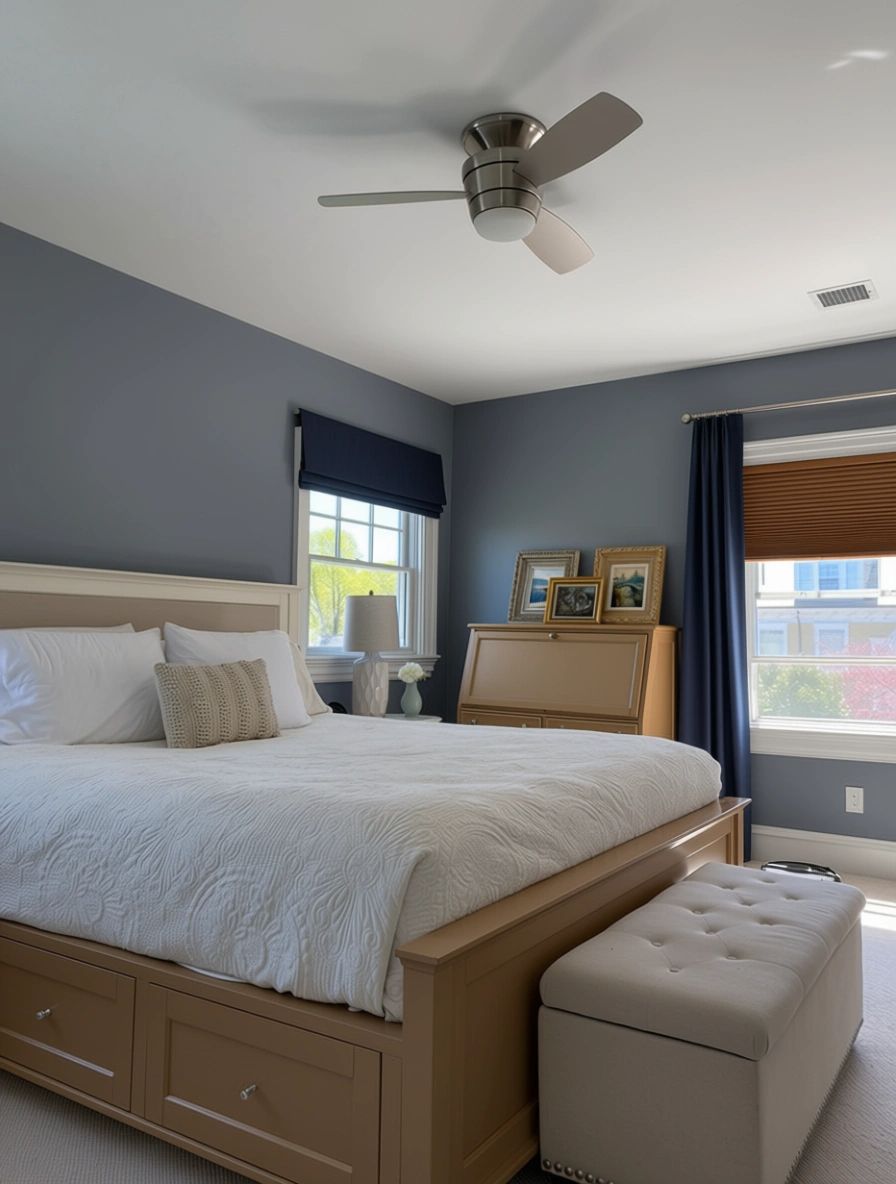
These are the colors our clients ask about most.
Blue drapery
- The feel: Calm, classic, and easy to live with.
- Pairs well with: White, gray, and light wood furniture.
- Best for: A serene, timeless primary bedroom.
White or cream drapery
- The feel: Clean, bright, and flexible.
- Pairs well with: Almost any style.
- Best for: Smaller bedrooms, or rooms that need more light.
Gray drapery
- The feel: Modern and polished.
- Pairs well with: Contemporary and classic rooms alike.
- Best for: Anyone who loves neutrals with a little edge.
Green drapery
- The feel: Fresh and natural.
- Pairs well with: Wood tones, beige walls, and plants.
- Best for: Nature-inspired rooms, or a soft change from gray.
Navy and charcoal drapery
- The feel: Deep, private, and dramatic.
- Pairs well with: Light walls and large windows.
- Best for: Bedrooms where you want privacy and stronger light control.
Warm tones like rust or gold
- The feel: Energetic and bold.
- Use with care: Try muted versions, or use them as an accent in a second layer.
Which drapery color works for my room size and light?
Your room does half the work for you.
- Small bedrooms: Cream, pale gray, or soft blue can make the room feel larger. Hang the panels high and wide to add height.
- Rooms with little light, such as a narrow brownstone bedroom on Beacon Hill: Lighter colors keep the space bright. If you want a deeper shade, pair it with a sheer layer.
- Bright, sunny rooms, like many suburban colonials in Newton and Needham: Darker or lined drapery handles glare and looks rich in strong light.
If you want help matching a color to your walls and bedding, our guide to
choosing bedroom curtain colors that match your room walks through it step by step.
What do designers suggest before choosing?
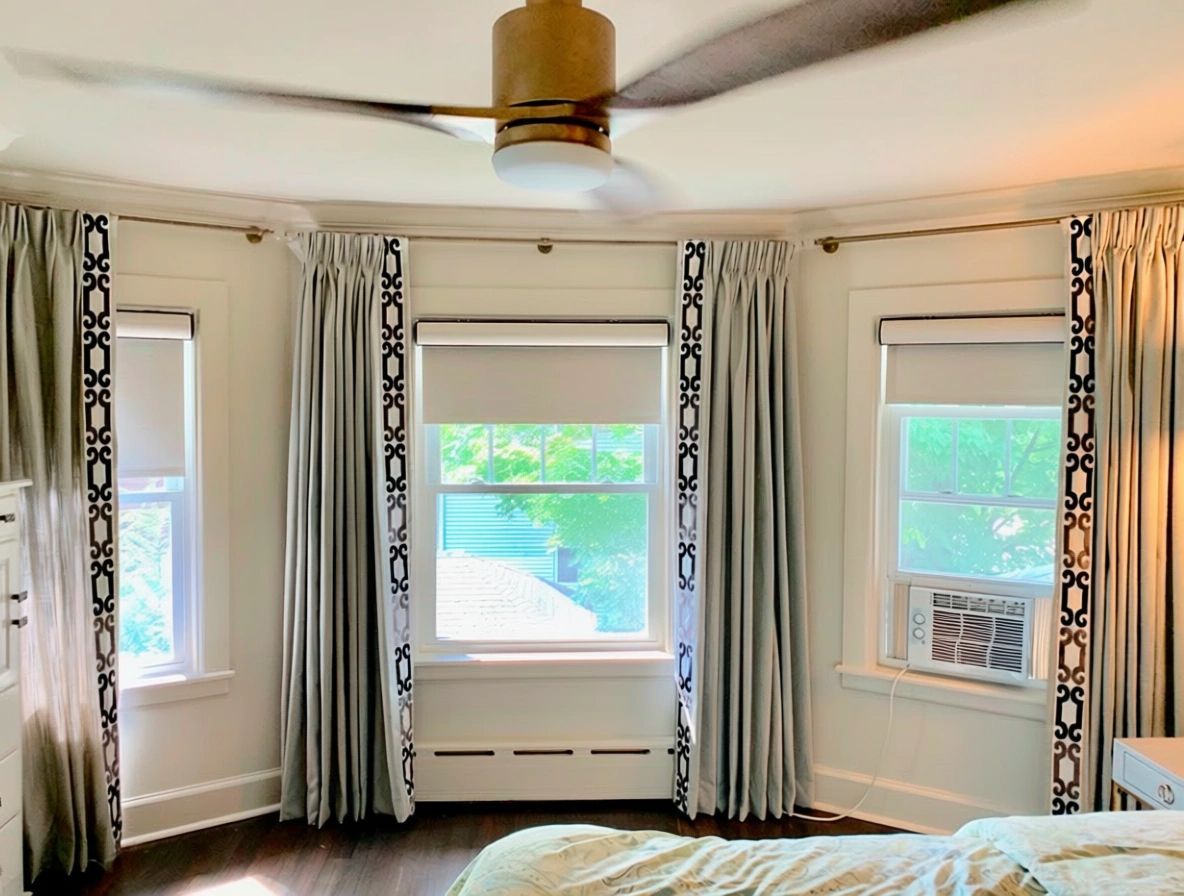
A few habits make a big difference:
- Test swatches on your wall in the morning, afternoon, and at night. Light changes color more than you would expect.
- Layer for flexibility. A sheer plus a lined panel gives you soft daylight and full darkness. If you are also weighing other window coverings, see the difference between blinds and drapes.
- Choose matte or softly textured fabrics. Linen, velvet, and woven designer fabrics feel calmer than shiny ones.
- Think about how you will open and close them. If your windows are tall or hard to reach,
motorized shades with Hunter Douglas PowerView can pair with your drapery for a smooth, one-touch routine.
Can I have the color I want and still block the light?
- Yes. With custom draperies, color and light control are separate choices. You pick the fabric and color you love, and we add the lining that fits your needs. A pale cream can still give you a dark bedroom.
Quick checklist: how to pick your bedroom drapery color
- What mood do I want this room to have?
- How much light control do I need?
- Does this color work with my walls, bedding, and rug?
- Will I want a sheer layer for daytime?
- Have I seen the fabric in my own room, in my own light?
When in doubt, start with a calm neutral and add color through pillows, art, or a trim.
Frequently asked questions
Should bedroom curtains be darker or lighter than the walls?
It depends on the feel you want. Darker curtains add contrast and coziness. Lighter curtains blend in and can make the room feel more open. Curtains close to the wall color are the calmest choice.
What is the most relaxing curtain color for a bedroom?
Many people find soft blues, gentle greens, and warm grays the most relaxing. Low-saturation colors tend to feel quieter than bright ones. Keep in mind that darkness and quiet matter as much as color for sleep.
Can curtains make a bedroom feel bigger?
Yes. Light-colored drapery hung high and wide can make ceilings look taller and windows look larger.
What curtain color makes a bedroom feel cozy?
Deeper shades like navy, chocolate brown, and charcoal feel warm and enclosed, especially in a soft, lined fabric.
Is it okay to use a bold color in a bedroom?
Yes, when the rest of the room is calm. Let the drapery be the one strong piece, and keep walls and bedding quiet.
Ready to transform your windows? Request your free in-home consultation.
Kendra Weldon has more than 20 years of interior design experience, and Simply Windows has served Greater Boston since 2010. We bring the showroom to you, with designer fabric samples in hand, so you can see colors in your own bedroom. There is no pressure, just good design advice.
