
Holiday-Ready Window Treatments for Entertaining Spaces
How Can Window Treatments Make Your Home Holiday-Ready?
The right window treatments can make living rooms, dining rooms, and other entertaining spaces feel warmer, more polished, and more comfortable before guests arrive.
Holiday season decorating often focuses on tables, mantels, greenery, and lighting. But windows take up a large amount of visual space. If the window treatments feel unfinished, the entire room can feel unfinished too.
At Simply Windows, Kendra Weldon looks at entertaining spaces as an interior designer first. She considers how the room feels during the day, how it changes after dark, and how people actually move through the space when family and friends gather.
For Boston and MetroWest homeowners, a holiday refresh may mean custom drapery, Roman shades, layered window treatments, or motorized shades. The goal is not to create a room that only works for the holidays. It is to make the space feel finished all year.
Why Does Custom Drapery Work So Well in Dining Rooms?
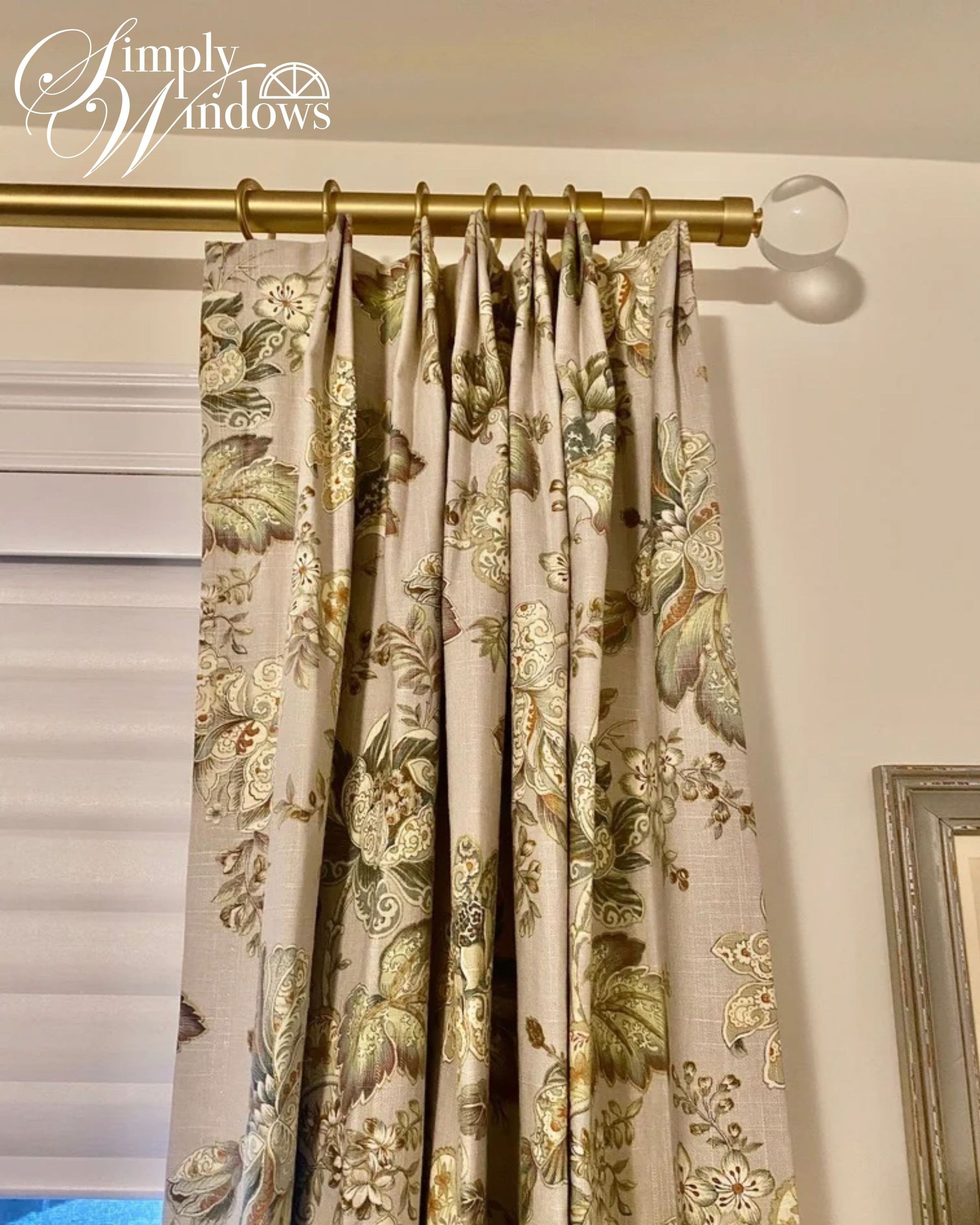
Custom drapery works especially well in dining rooms because it adds softness, height, and visual warmth around the windows.
Dining rooms often contain many hard surfaces. Tables, chairs, flooring, cabinetry, glass, and lighting fixtures can make the space feel structured.
Fabric helps soften that effect.
Full-length drapery can also make a room feel taller and more finished. The way it is mounted, how much fabric is used, and where the panels fall all affect the final look.
Kendra considers the proportions of the room before selecting a drapery style. A large Weston dining room with tall windows may need more visual presence than a smaller dining space in a Boston townhome.
Fabric choice matters too.
A textured neutral can create warmth without competing with holiday decorations. A subtle pattern can bring personality into a traditional dining room. A richer fabric can give a formal room more depth.
The goal is not to decorate the windows for one season. It is to create a strong foundation that works with seasonal decorating throughout the year.
Should You Layer Shades and Drapery in a Living Room?
Yes. Layering a functional window shade with drapery can give a living room greater flexibility while creating a more finished interior.
Each treatment can handle a different job.
The window shade can provide everyday privacy and light control. The drapery can add fabric, scale, and softness.
This is especially helpful when entertaining.
During the afternoon, the shade may reduce glare while still allowing the room to feel bright. In the evening, the treatment can provide more privacy while the drapery adds a warmer, more intimate feeling.
Layering can work well with Roman shades, roller shades, woven wood shades, or other custom window treatments.
In a Brookline living room with traditional details, Kendra may choose a tailored Roman shade with drapery panels. In a more contemporary space, a clean roller shade paired with simple fabric panels may feel more appropriate.
The layers should complement the room rather than compete with it.
Can Roman Shades Make a Room Feel More Finished?
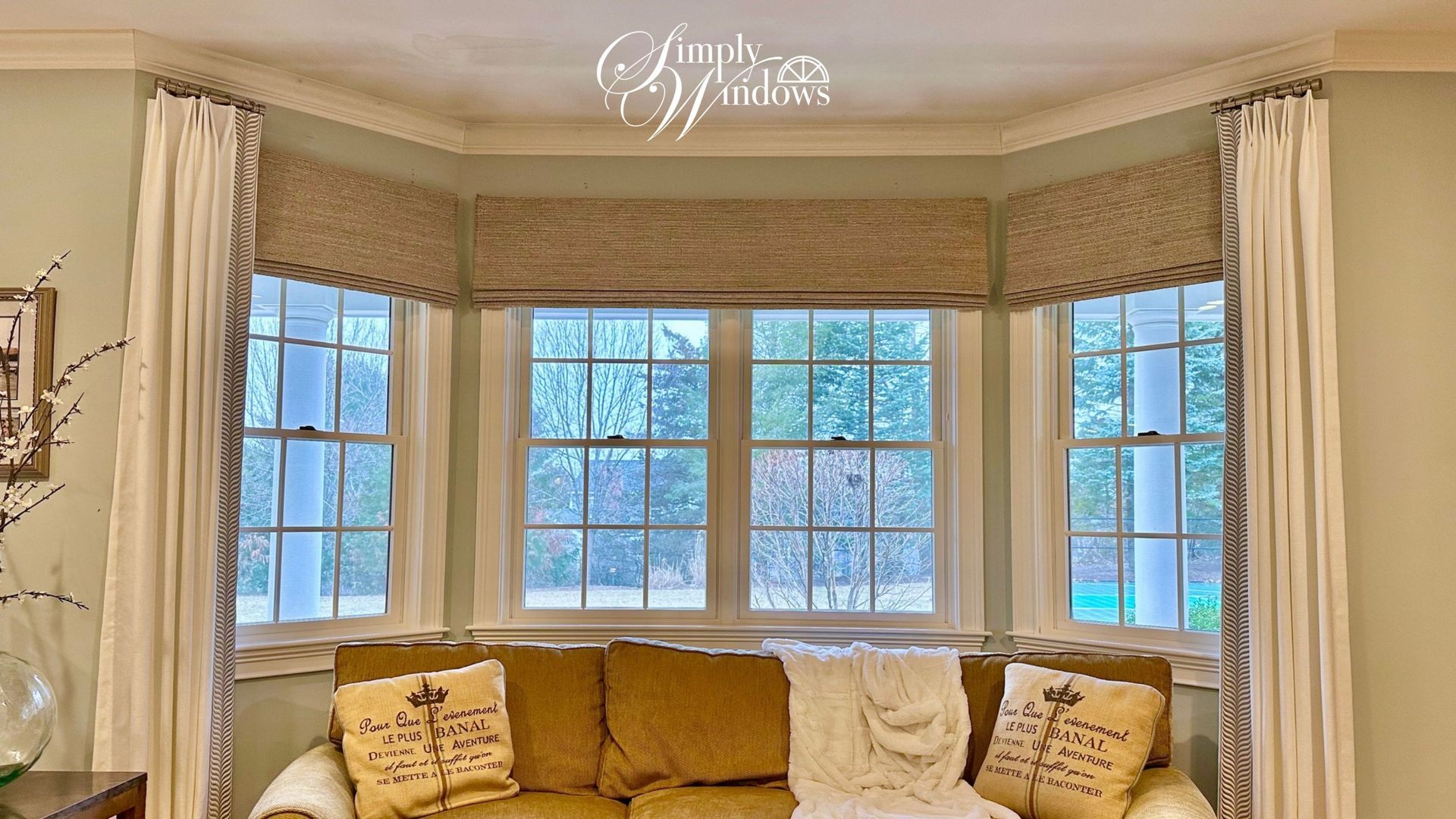
Roman shades can make a room feel more finished by adding the softness of fabric in a tailored, compact form.
They are particularly useful when homeowners want fabric at the window but do not have space for full drapery panels.
Roman shades work well in:
- Dining rooms
- Living rooms
- Breakfast areas
- Home offices
- Bay windows
- Smaller sitting rooms
The fabric becomes part of the design even when the shade is raised.
That makes Roman shades a good choice for entertaining spaces where every visible detail contributes to the overall feeling of the room.
In older Boston homes, Roman shades can also provide privacy without covering beautiful trim or architectural details with too much fabric.
They can stand alone or become part of a layered window treatment.
How Do You Manage Glare During Holiday Gatherings?
Window shades can help manage glare by allowing you to adjust direct sunlight without completely darkening the room.
Low seasonal sun can be especially noticeable in living and dining spaces. It may fall directly across a table, reflect from a television, or shine into guests' eyes during an afternoon gathering.
This is one reason adjustable light control matters.
Roller shades, Roman shades, sheer shadings, shutters, and other custom window coverings can help manage changing light conditions.
The direction the room faces matters too.
A treatment that works beautifully on a north-facing window may not be enough for strong afternoon sun from another direction.
Kendra looks at the window in the actual room so she can understand when sunlight becomes a problem.
That allows the treatment to respond to real conditions rather than simply looking attractive in a sample book.
Are Motorized Shades Useful When Entertaining?
Motorized shades can be especially useful in entertaining spaces because they make it easier to adjust several windows without interrupting the room.
Imagine guests arriving in the late afternoon.
The room may begin bright and sunny. As the evening progresses, you may want more privacy and less exposed glass.
Instead of walking from window to window, motorization can make those adjustments easier.
Simply Windows works with Hunter Douglas PowerView and Lutron when motorized shades are appropriate for the project.
Motorization can be particularly useful for:
- Large banks of windows
- Tall windows
- Hard-to-reach openings
- Open-plan living areas
- Rooms with several window treatments
Kendra does not recommend motorization simply because it is available. The technology should make daily life more convenient and fit naturally into the design.
Should Holiday Window Treatments Use Seasonal Colors?
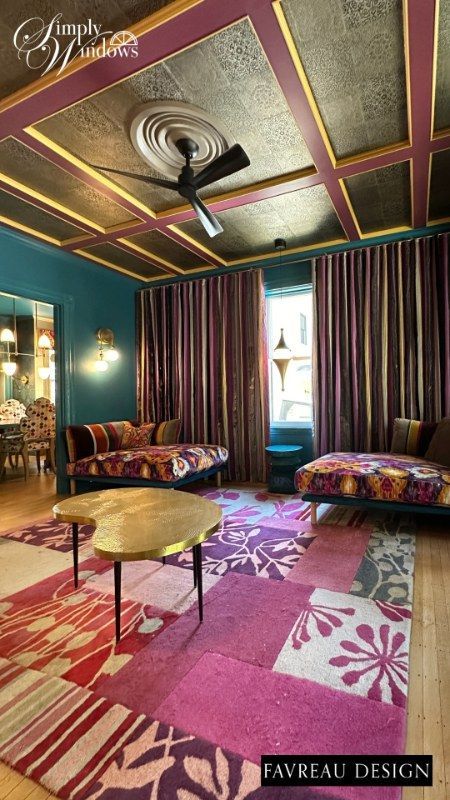
Window treatments do not need seasonal colors to make a room feel ready for the holidays.
In fact, timeless fabrics often provide a better foundation.
Warm neutrals, soft texture, natural materials, and classic patterns can work with holiday décor without limiting the room during the rest of the year.
Think of the window treatment as part of the architecture and furnishings.
Seasonal color can come from:
- Table linens
- Greenery
- Flowers
- Pillows
- Throws
- Decorative accessories
The window treatment can provide the texture and visual structure that makes those details stand out.
This approach also keeps the room from feeling overly themed.
A beautiful custom drapery treatment should look just as appropriate after the holiday decorations are put away.
What Window Treatments Work for Open-Concept
Entertaining Spaces?
Open-concept spaces benefit from window treatments that feel coordinated from one area to another without requiring every window to match exactly.
A kitchen, dining area, and living room may all be visible at once.
Using completely unrelated window treatments can make the space feel disconnected. Using the exact same treatment everywhere may ignore how each part of the room functions.
Kendra often looks for a common design language instead.
That might mean:
- Coordinating fabrics
- Similar neutral tones
- Related hardware finishes
- Consistent shade styles
- Repeating textures
A dining area may have drapery while nearby windows use Roman shades in a related fabric.
The treatments feel connected, but each area still gets what it needs.
That is particularly useful in Westborough and MetroWest homes with open floor plans where entertaining often moves easily between the kitchen, dining, and living spaces.
How Does Simply Windows Design Window Treatments for Entertaining Spaces?
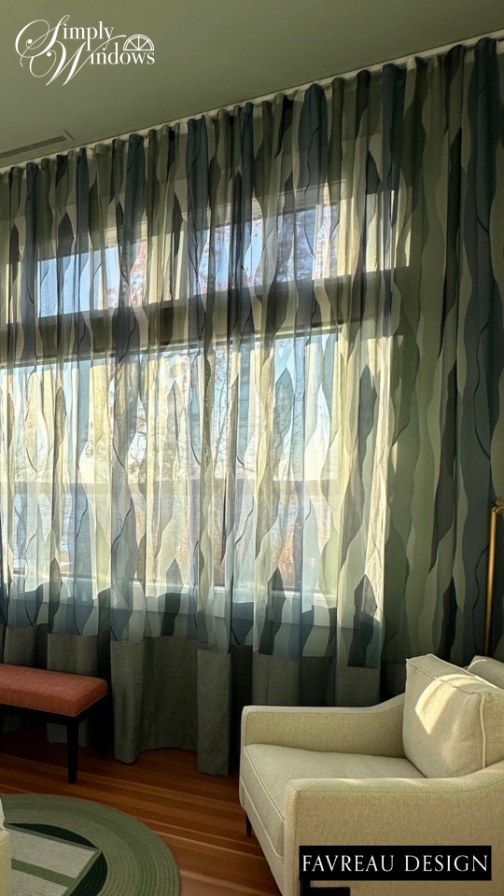
Simply Windows designs window treatments for entertaining spaces by considering how the room looks, feels, and functions when people gather there.
Kendra Weldon brings a 20-year interior design background to each consultation. She looks at natural light, evening privacy, furniture placement, architecture, fabric, and how the room connects to surrounding spaces.
Simply Windows in Westborough provides custom window treatments for homeowners throughout MetroWest and Greater Boston. The team can help with custom draperies, Roman shades, motorized shades, shutters, blinds, and other window coverings, along with professional measuring and White Glove Installation.
During an in-home consultation, you can see fabrics and samples in your own space and under your own lighting.
That makes it easier to choose window treatments that feel welcoming when guests arrive—and still feel right long after the holidays are over.
Ready to transform your windows? Request your free in-home consultation.
Frequently Asked Questions
Q: What are the best window treatments for a dining room?
A: Custom drapery, Roman shades, shutters, and layered window treatments can all work well. The best option depends on privacy, natural light, architecture, and the level of formality you want.
Q: Should living room window treatments match dining room window treatments?
A: They do not need to match exactly. Coordinating fabrics, colors, textures, or hardware can create continuity while allowing each room to use the treatment that functions best.
Q: Are Roman shades good for entertaining spaces?
A: Yes. Roman shades add fabric and softness without requiring the wall space of full drapery. They can work especially well in dining rooms, living rooms, and bay windows.
Q: Can motorized shades help when entertaining?
A: Yes. Motorized shades can make it easier to adjust privacy and glare across several windows, particularly in large or open-plan entertaining spaces.
Q: How can I make my windows feel more festive without using holiday fabric?
A: Choose timeless window treatments with warmth, texture, and good proportions. Seasonal color can come from greenery, table linens, pillows, and accessories while the window treatments remain appropriate year-round.
