
Are Shutters Right for Your Sliding Glass Door?
Are Shutters the Right Choice for
Sliding Glass Doors?
Shutters for sliding glass doors can be a beautiful option, but they are not automatically the right solution for every large glass door.
A sliding door has to do several jobs at once. It brings natural light into the room, provides access to a deck, patio, or balcony, and often takes up a large portion of the wall. The window treatment needs to provide privacy and light control without making the door difficult to use.
That is why Kendra Weldon approaches sliding glass doors as a design problem first and a product decision second.
At Simply Windows, we look at the entire room before recommending a treatment. We consider how often you use the door, where furniture sits, how much glare enters the room, how much privacy you need, and how the treatment will relate to the rest of your home.
Sometimes shutters make sense. Other times, another custom window treatment may work better.

Can You Put Shutters on a Sliding Glass Door?
Yes, shutters can work on some sliding glass doors, but the size and layout of the opening need to support them.
Sliding glass doors are much larger than standard windows. They also need regular access, which changes how a treatment needs to operate.
Before recommending shutters, Kendra considers questions such as:
- How often is the door opened?
- Is there room for the shutter panels to move?
- Will furniture interfere with the treatment?
- How much of the glass do you want exposed during the day?
- Is privacy more important than preserving the view?
- Does the shutter style suit the architecture of the room?
These details matter because a treatment can look attractive and still feel inconvenient in daily use.
For Simply Windows, the goal is not to make shutters fit every door. The goal is to determine whether shutters truly make sense for that specific room.
When Do Shutters Make Sense for a Sliding Glass Door?
Shutters can make sense when you want an architectural look, adjustable light control, and a substantial treatment for a large opening.
The louvers allow you to adjust light and privacy without completely uncovering the glass. That can be useful in rooms where privacy changes throughout the day.
Shutters can also give a large wall of glass more visual structure. In the right home, they can feel like part of the architecture rather than an accessory added afterward.
They may be worth considering when:
- The room has traditional or transitional architecture.
- Privacy is an important concern.
- You prefer a structured look rather than soft fabric.
- The treatment has enough space to operate without interfering with furniture.
- You want adjustable louvers for light control.
Still, the appearance of shutters should not be the only deciding factor.
A sliding glass door is often one of the most frequently used openings in a home. Ease of use needs to be considered just as carefully as style.
When Might Another Window Treatment Work Better?
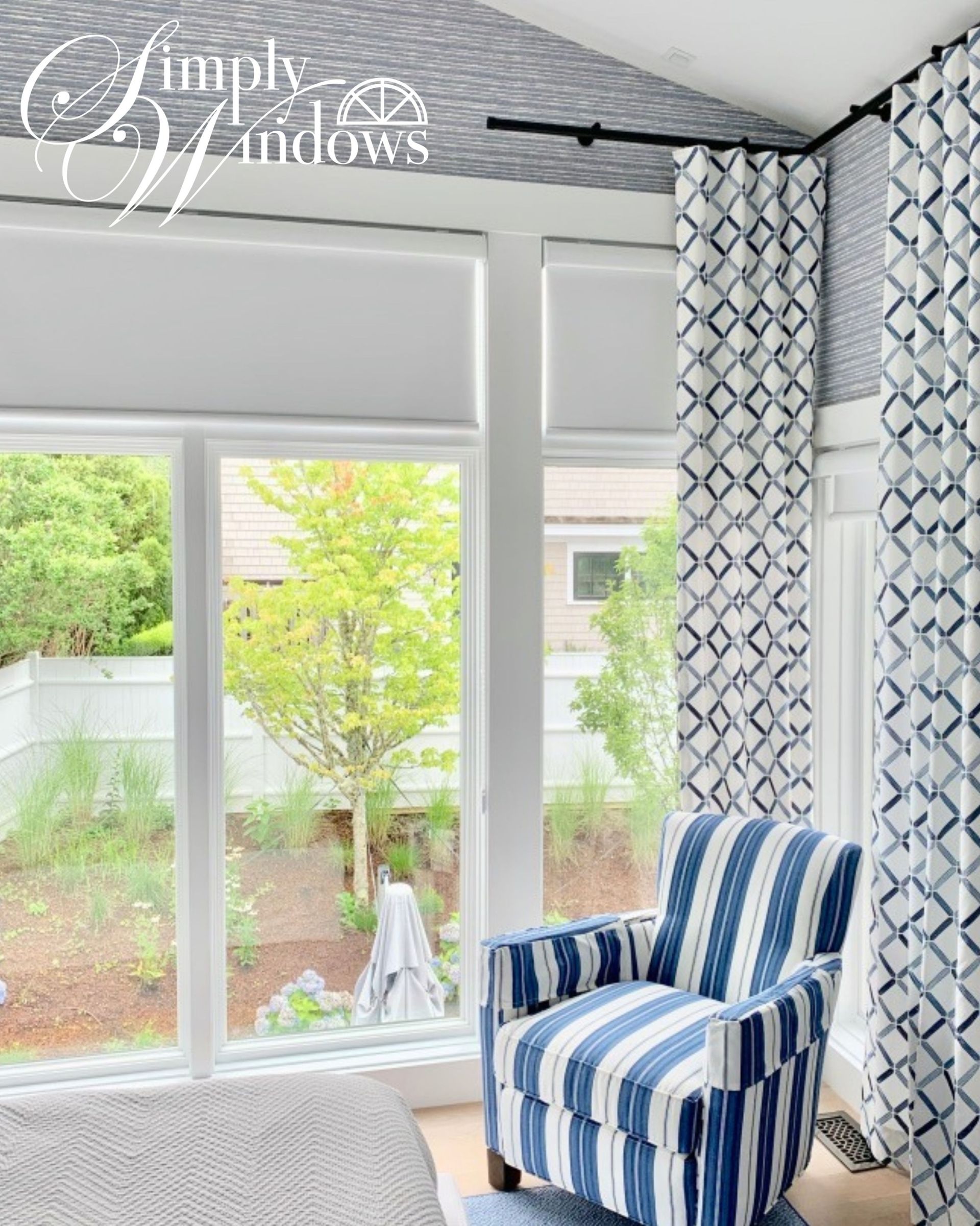
Another custom window treatment may work better when you want a treatment that takes up less space, preserves more of the glass, or is easier to operate throughout the day.
Simply Windows offers several options for large doors and windows, including roller shades, motorized shades, vertical blinds, and other custom window coverings.
For example, a clean roller shade may work well when the homeowner wants the treatment to disappear as much as possible when it is open.
Motorized shades can be useful when a large expanse of glass includes several treatments that need to operate together. Hunter Douglas PowerView and Lutron are motorization options available through Simply Windows.
Vertical blinds may also be considered for certain sliding doors because their operation follows the horizontal movement of the door.
The right answer depends on the room.
Kendra may recommend shutters for one sliding door and a completely different treatment for another. That is part of working with a designer rather than starting with a predetermined product.
What Should You Consider Before Covering a Sliding Glass Door?
Before choosing a treatment for a sliding glass door, consider how the door functions within the room.
A large glass door is not simply an oversized window. It is also a passageway.
Start with these questions.
How often do you use the door?
A patio door that opens several times a day needs easy access. A less frequently used balcony door may allow for a different treatment.
How much light do you want to keep?
Large glass doors often provide some of the best natural light in the room. A treatment should control glare and privacy without unnecessarily taking away the light you enjoy.
What is beside the door?
Furniture, artwork, outlets, trim, and available wall space can all affect which treatments are practical.
Do you want the treatment to stand out or disappear?
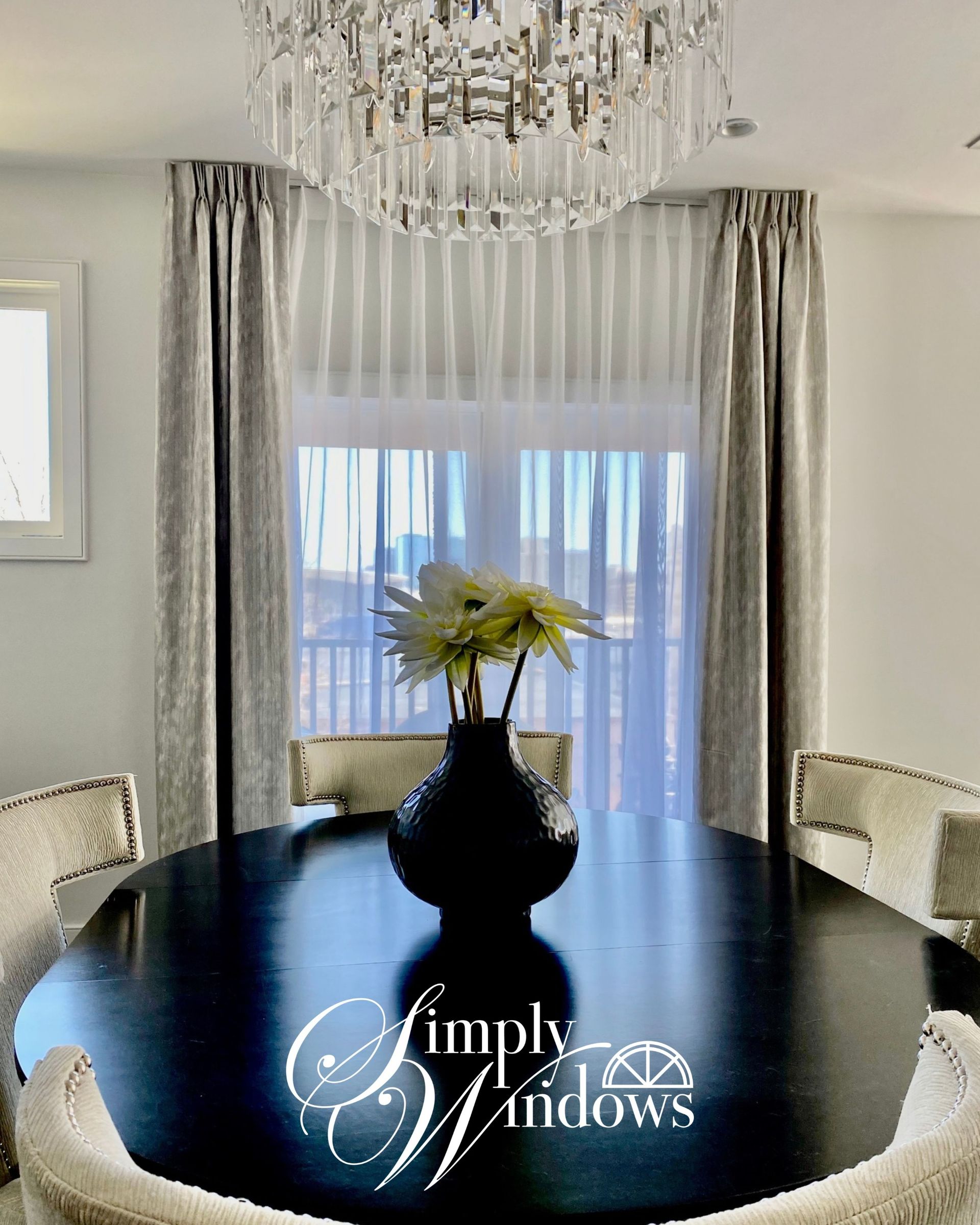
Shutters create a stronger architectural statement. A roller shade may have a quieter appearance. Drapery can add softness and fabric to the space.
None of these approaches is automatically better.
The right treatment is the one that fits both the room and the way you live in it.
How Does Furniture Placement Affect the Choice?
Furniture placement can determine whether shutters or another treatment will be comfortable to use.
This is one reason Kendra prefers to see a sliding door in the home rather than evaluating it only from measurements.
A sectional sofa, dining table, console, or reading chair may sit close to the glass. That can affect how much room a treatment has to move.
The door may also sit along an important traffic path between the kitchen, living room, and deck.
When the treatment is considered together with the furniture plan, it is easier to create something that feels natural.
That is the difference between choosing a window covering and designing one as part of the room.
What Works for MetroWest Sliding Doors?
MetroWest homes often have sliding doors leading to decks, patios, sunrooms, and outdoor living spaces.
Westborough and other MetroWest homes may also have open floor plans where the sliding door is visible from several areas at once. In those rooms, the treatment becomes part of the larger interior design.
The current Simply Windows design brief notes that Westborough and MetroWest homes often include sliding doors to decks and patios, sunrooms, and open floor plans.
A shutter may work beautifully when the room calls for stronger architectural lines.
In another home, a simple window shade may maintain the open feeling while providing the light and privacy control the family needs.
Local conditions also matter. New England seasons bring changing light throughout the year, including bright summer sun and lower winter sun that can create glare.
That makes flexible light control especially valuable on large glass doors.
What About Sliding Doors in Boston Condos?
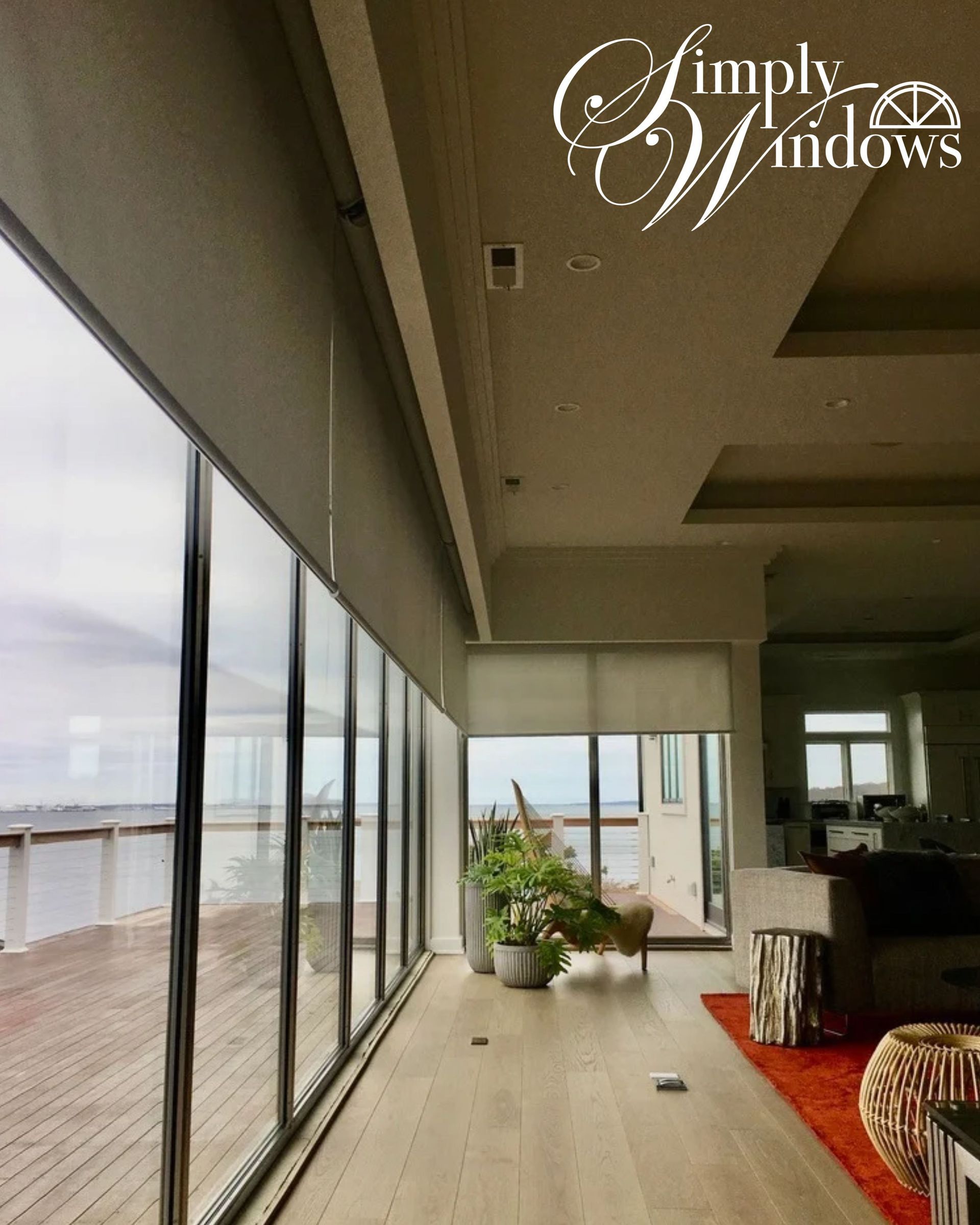
Boston condos often have large glass openings where preserving the view and managing glare are equally important.
In the Seaport and SoWa, modern buildings can include large walls of glass with limited mounting space.
That may lead Kendra toward a more streamlined treatment rather than a visually heavier option.
The architecture should guide the decision.
A treatment that feels appropriate in a traditional MetroWest family room may not be the right choice for a contemporary Boston condo.
This is why Simply Windows does not approach large windows and doors with a one-product solution.
Why Is an In-Home Consultation Helpful for a Sliding Glass Door?
An in-home consultation makes it easier to choose the right sliding glass door treatment because the designer can see the light, furniture, wall space, and traffic flow in the actual room.
Simply Windows brings the showroom to you. Kendra arrives with fabrics and samples so you can compare options in your own light and alongside your existing furnishings.
Simply Windows in Westborough provides custom window treatments throughout MetroWest and Greater Boston. Kendra brings a 20-year interior design background to the process, while the Simply Windows team handles measuring and White Glove Installation.
For a sliding glass door, that design-first approach can be especially valuable.
You may begin the consultation thinking you want shutters and discover that they are the right choice. Or you may find that another treatment gives you better access, cleaner lines, or more flexibility.
Either result is a good one when the window treatment fits the way you actually live.
Ready to transform your windows? Request your free in-home consultation.
Frequently Asked Questions
Q: Can you put shutters on sliding glass doors?
A: Yes. Shutters can work on some sliding glass doors when the opening, available space, and way the door is used support the design.
Q: Are shutters the best window treatment for a sliding glass door?
A: Not always. Shutters are one option, but roller shades, motorized shades, vertical blinds, or other custom window treatments may work better depending on the room.
Q: What should I consider when covering a sliding glass door?
A: Consider privacy, glare, door access, furniture placement, available mounting space, and the style of the room before choosing a window treatment.
Q: Can motorized shades work on sliding glass doors?
A: Motorized shades can be a useful option for some large glass doors, especially when easy operation or coordinated control of several treatments is important.
Q: Should a sliding glass door treatment match the other windows in the room?
A: It should coordinate with the room, but it does not have to be identical. A designer can use related colors, materials, or finishes while choosing the treatment that functions best for the door.
