
Why Boston Designers Love Ripplefold Drapery
Why Is Ripplefold Drapery Popular in Boston Interiors?
Ripplefold drapery is popular in Boston interior design because it combines the softness of fabric with a clean, tailored look that works beautifully in both modern and transitional spaces.
Unlike traditional drapery with structured pleats at the top, Ripplefold drapery forms a continuous series of smooth, even waves. The result feels polished without looking overly formal.
At Simply Windows, we often look for window treatments that complement the architecture rather than compete with it. Ripplefold drapery can do exactly that.
It can frame large windows, soften modern spaces, and bring texture to rooms that need warmth without a lot of visual weight.
What Is Ripplefold Drapery?
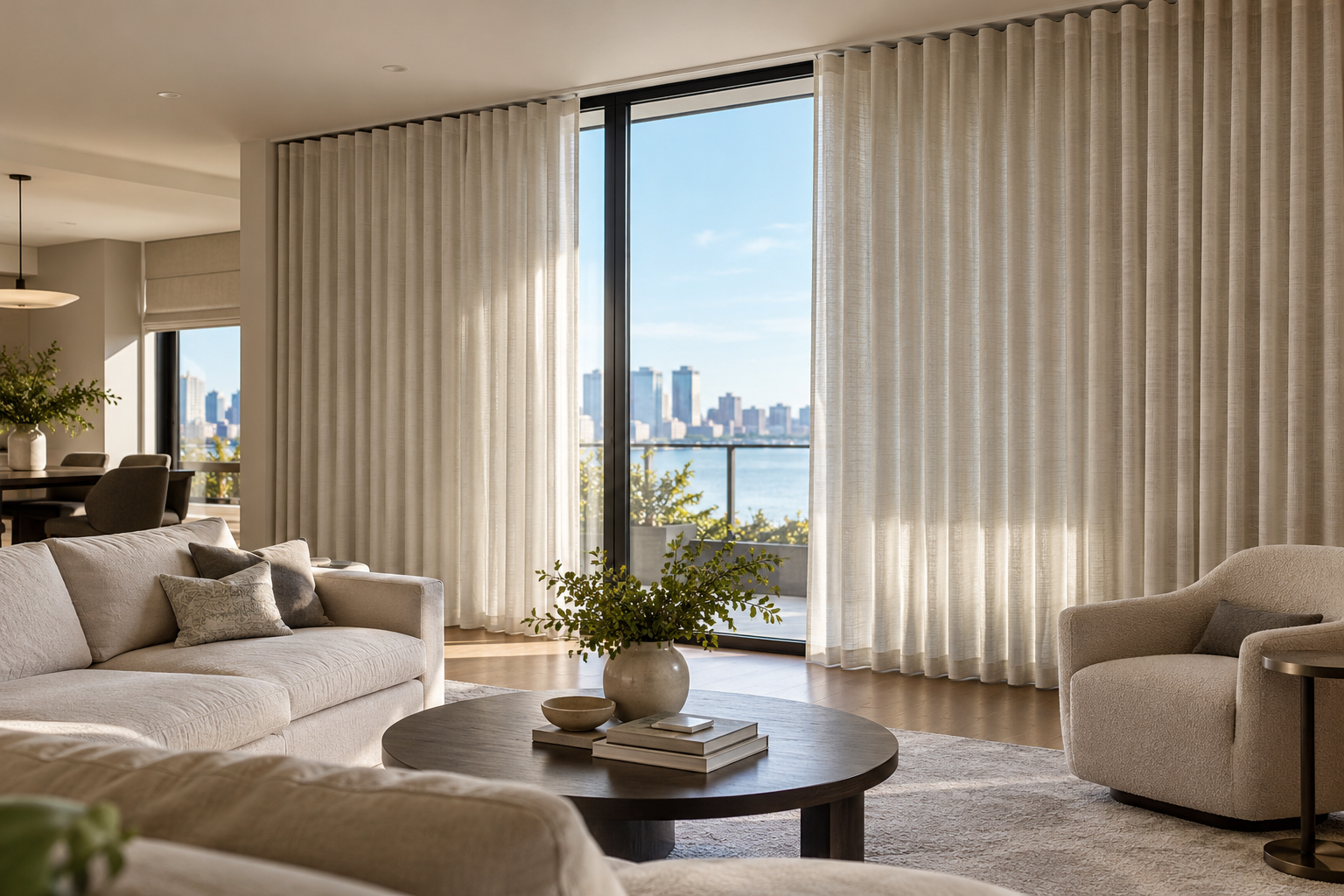
Ripplefold drapery is a custom drapery style that creates evenly spaced, flowing folds from the top of the panel to the floor.
The fabric moves along a track, creating the repeating wave that gives Ripplefold its name.
The look is different from traditional pinch-pleat drapery.
Pinch pleats create defined folds at the top of the treatment. Ripplefold drapery creates a more continuous rhythm across the entire panel.
That difference gives Ripplefold a simpler, more contemporary appearance.
The effect can be especially attractive when the drapery spans a large window or wall of glass. Instead of creating a busy line of individual pleats, the fabric moves in soft, consistent waves.
Why Does Ripplefold Drapery Look So Modern?
Ripplefold drapery looks modern because its clean lines and consistent folds create a simple architectural rhythm.
There is very little visual clutter at the top of the treatment.
That makes it a natural choice for contemporary interiors where the furniture, lighting, art, and architecture already have strong lines.
In a Boston condo with floor-to-ceiling windows, for example, heavy traditional pleats may feel too formal. Ripplefold drapery can soften the glass while keeping the room streamlined.
It also works well with minimalist interiors.
Minimal does not have to mean cold. Fabric adds movement, texture, and softness while the Ripplefold construction keeps the overall design controlled.
Is Ripplefold Drapery Only for Contemporary Homes?
No. Ripplefold drapery can also work well in transitional and updated traditional interiors.
The fabric plays a major role in how the finished treatment feels.
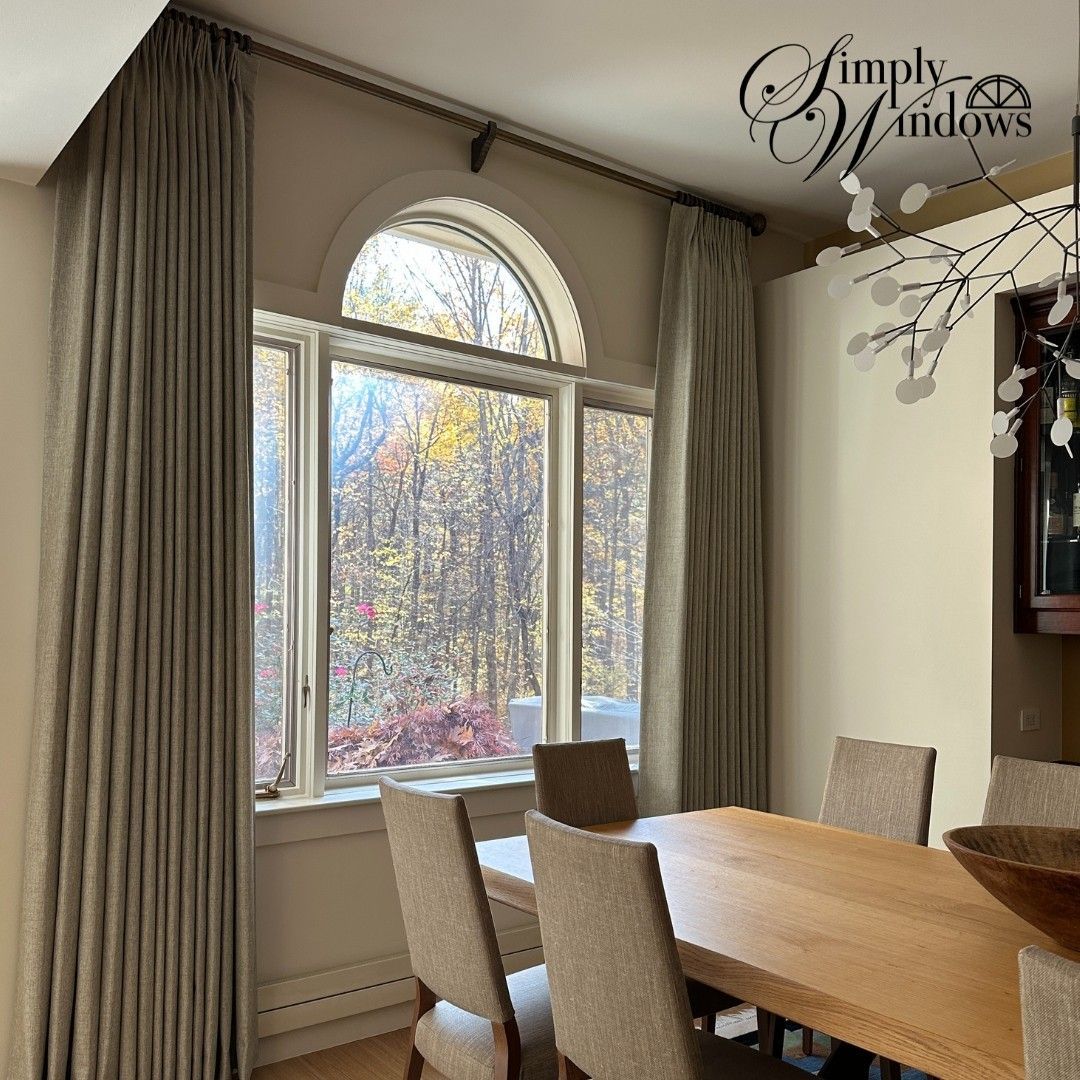
A crisp neutral fabric can look distinctly modern. A softer linen-like texture can create a more relaxed feeling. A subtle pattern or richer fabric can bring Ripplefold into a room with more traditional furnishings.
This flexibility is one reason designers like the style.
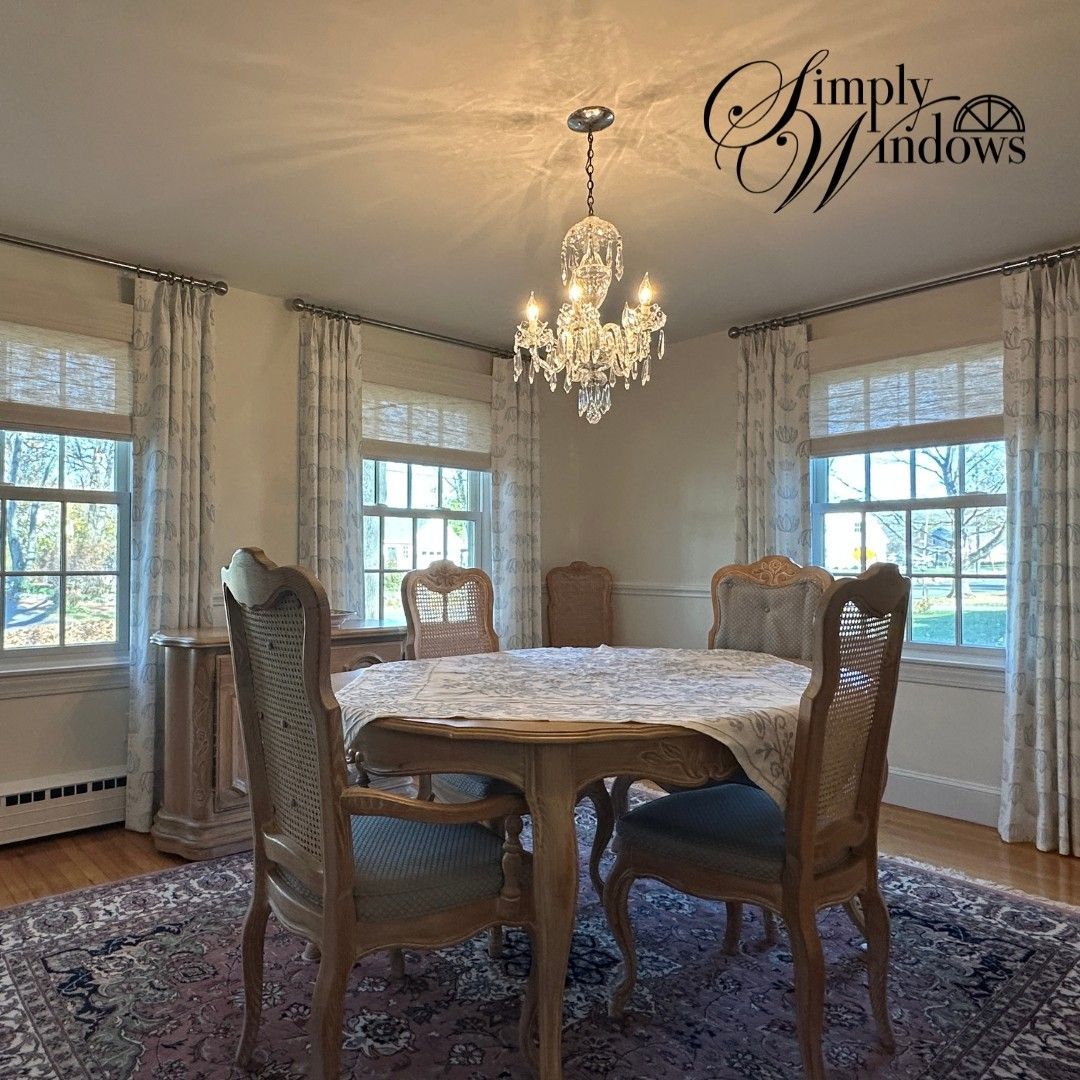
A Brookline home with classic architecture may use Ripplefold drapery differently from a modern Seaport condo. The construction can remain clean and tailored while the fabric connects the treatment to the character of the room.
Kendra looks at the entire space before choosing the fabric.
The drapery needs to relate to the furniture, wall color, flooring, rugs, and other textiles already in the room.
Why Does Ripplefold Drapery Work Well on Large Windows?
Ripplefold drapery works especially well on large windows because the repeated folds create visual order across a wide span.
Large windows need treatments with the right scale.
A treatment that feels substantial enough for the glass can sometimes become visually heavy. Ripplefold offers another option.
The fabric provides softness and coverage, while the consistent waves keep the treatment looking organized.
This can work beautifully for:
- Large living room windows
- Floor-to-ceiling glass
- Sliding glass doors
- Wide window walls
- Primary bedrooms
- Open-concept living spaces
Boston condos in the Seaport and SoWa can have large expanses of glass where glare and privacy become part of the design decision.
In those spaces, Ripplefold drapery can frame the glass without taking away from the architecture.
Should Ripplefold Drapery Touch the Floor?
Ripplefold drapery usually looks most tailored when the length is carefully planned in relation to the floor.
The exact length is a design decision.
Some homeowners prefer a very clean finish close to the floor. Other rooms may call for a slightly softer appearance.
What matters most is precision.
With a style as clean as Ripplefold, small differences in length are noticeable. Accurate measuring and professional installation help the waves fall evenly and keep the treatment looking intentional.
Kendra also considers the flooring, furniture placement, and how frequently the drapery will be opened and closed.
A beautiful drapery treatment still needs to work comfortably in daily life.
Can You Layer Ripplefold Drapery With Window Shades?
Yes. Ripplefold drapery can be layered with window shades when you want the drapery to provide softness while another treatment handles everyday light and privacy control.
This can be especially effective on large windows.
A roller shade or another streamlined window shade can provide practical coverage. Ripplefold drapery can then frame the opening and add fabric to the room.
The two treatments do not have to compete.
The window shade can remain visually quiet while the drapery becomes part of the interior design.
Layering also provides flexibility.
During the day, you may want filtered light with the drapery open. In the evening, you may want more privacy and a softer feeling around the windows.
Kendra considers how each layer will function before recommending both.
Adding more treatments does not automatically make a window better. Each layer should have a reason to be there.
Does Ripplefold Drapery Work in Boston Historic Homes?
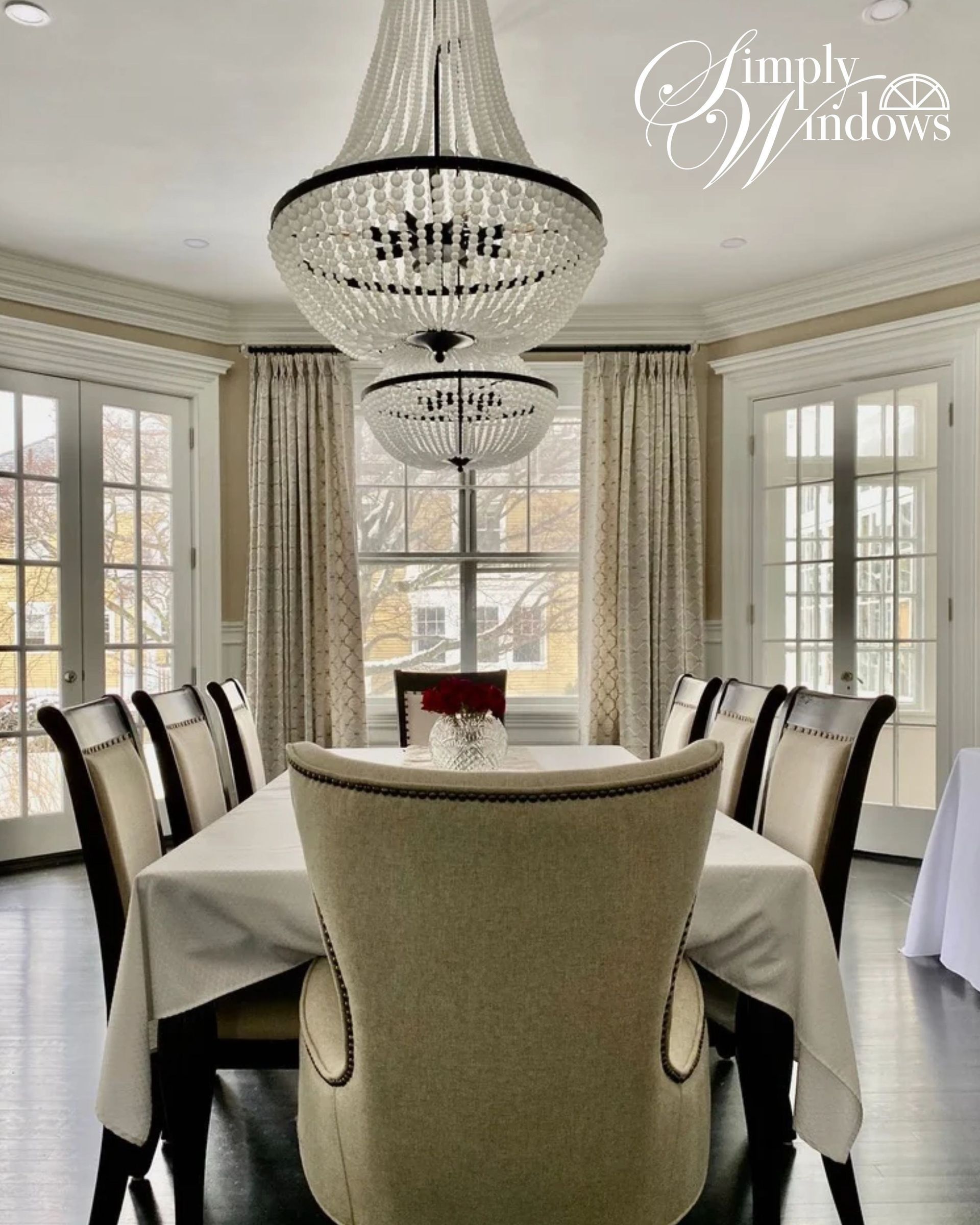
Ripplefold drapery can work in some historic Boston interiors when the clean construction complements the way the home has been renovated and furnished.
Historic does not always mean traditional.
A South End townhome or Beacon Hill residence may retain original architectural details while using more contemporary furniture, lighting, and finishes.
In that type of interior, Ripplefold can create an interesting balance.
The drapery brings softness without introducing another highly traditional element.
The architecture still needs to guide the decision.
Original trim, window proportions, ceiling height, and available mounting space all matter. Kendra looks at those details before deciding whether Ripplefold, Roman shades, shutters, traditional drapery, or another custom window treatment makes more sense.
The goal is never to choose a style simply because it is popular.
The goal is to choose what belongs in the room.
Why Is Professional Measuring Important for Ripplefold Drapery?
Professional measuring is important because Ripplefold drapery depends on proportion, length, track placement, and consistent fabric movement.
A small measuring error can be more noticeable on a wide drapery treatment.
The placement of the track also affects how the treatment relates to the ceiling and window.
In some rooms, positioning the treatment higher can help emphasize ceiling height. In others, existing trim or architectural details may determine where the track belongs.
Furniture placement should also be considered.
A drapery panel needs enough room to move without interfering with a console, sofa, radiator, or other feature near the window.
Simply Windows handles professional measuring and White Glove Installation so the design and installation can be considered together.
How Does Simply Windows Design Custom Ripplefold Drapery?
Simply Windows approaches Ripplefold drapery as part of the overall interior design rather than simply choosing fabric and covering a window.
Kendra Weldon brings a 20-year interior design background to each project. She considers the size of the window, ceiling height, architecture, furnishings, privacy needs, and the way natural light changes throughout the day.
For one Boston condo, Ripplefold drapery may provide just enough softness around a wall of glass. In another home, layered drapery and window shades may provide the right balance of privacy and design.
Simply Windows serves homeowners throughout Boston, Westborough, MetroWest, and surrounding Greater Boston communities with custom window treatments, professional measuring, designer fabrics, and White Glove Installation.
Ready to transform your windows? Request your free in-home consultation.
Frequently Asked Questions
Q: What is Ripplefold drapery?
A: Ripplefold drapery is a custom drapery style with smooth, evenly spaced folds that create a continuous wave across the fabric. It offers a clean, tailored alternative to more traditional pleated drapery.
Q: Is Ripplefold drapery modern or traditional?
A: Ripplefold generally has a clean, modern appearance, but fabric choice can make it work in contemporary, transitional, and some updated traditional interiors.
Q: Is Ripplefold drapery good for large windows?
A: Yes. Its consistent folds work especially well across wide windows and large glass areas because the fabric creates softness while maintaining clean visual lines.
Q: Can Ripplefold drapery be layered with window shades?
A: Yes. A window shade can provide everyday privacy and light control while Ripplefold drapery adds softness, texture, and a more finished appearance.
Q: Does Ripplefold drapery work in Boston townhomes and condos?
A: Yes, depending on the architecture and interior design. It can work especially well in renovated townhomes, contemporary condos, and spaces with large windows or clean-lined furnishings.
